Why modular systems are the sweet spot for future-proof intralogistics
Why a phased automation strategy matters
For logistics and supply chain leaders, flexibility has become just as important as performance. Several structural drivers are shaping this reality.
Labour scarcity and rising costs
Across Europe and North America, labour shortages remain the primary driver for warehouse automation investments. Nearly 40 percent of warehouses still lack sufficient staff to meet demand, while CEOs increasingly turn to robotics to secure operational continuity. Scalability is therefore a key evaluation criterion when selecting automated systems.
Market volatility and changing order profiles
E-commerce growth has stabilised compared to pandemic peaks, but order complexity continues to increase. Broader SKU ranges, smaller order sizes, and fluctuating volumes require warehouses to respond faster and more flexibly, without overinvesting in fixed capacity.
Capital risk mitigation
High upfront CAPEX and limited automation experience remain major barriers. A phased approach lowers these thresholds by spreading investments over time, validating the business case step by step, and reducing financial exposure.
Scalable automation as a competitive advantage
Automation is no longer only about speed or efficiency. The business case increasingly revolves around labour reduction, higher storage density, shorter lead times, and resilience during peak periods.
Scalable warehouse automation enables organizations to add capacity without disrupting live operations. This ensures continuity while creating a structural advantage over competitors that rely on rigid, one-off expansions.
In practice, our customers consistently confirm that scalability is a decisive factor for profitability and long-term growth.
Start small, scale fast
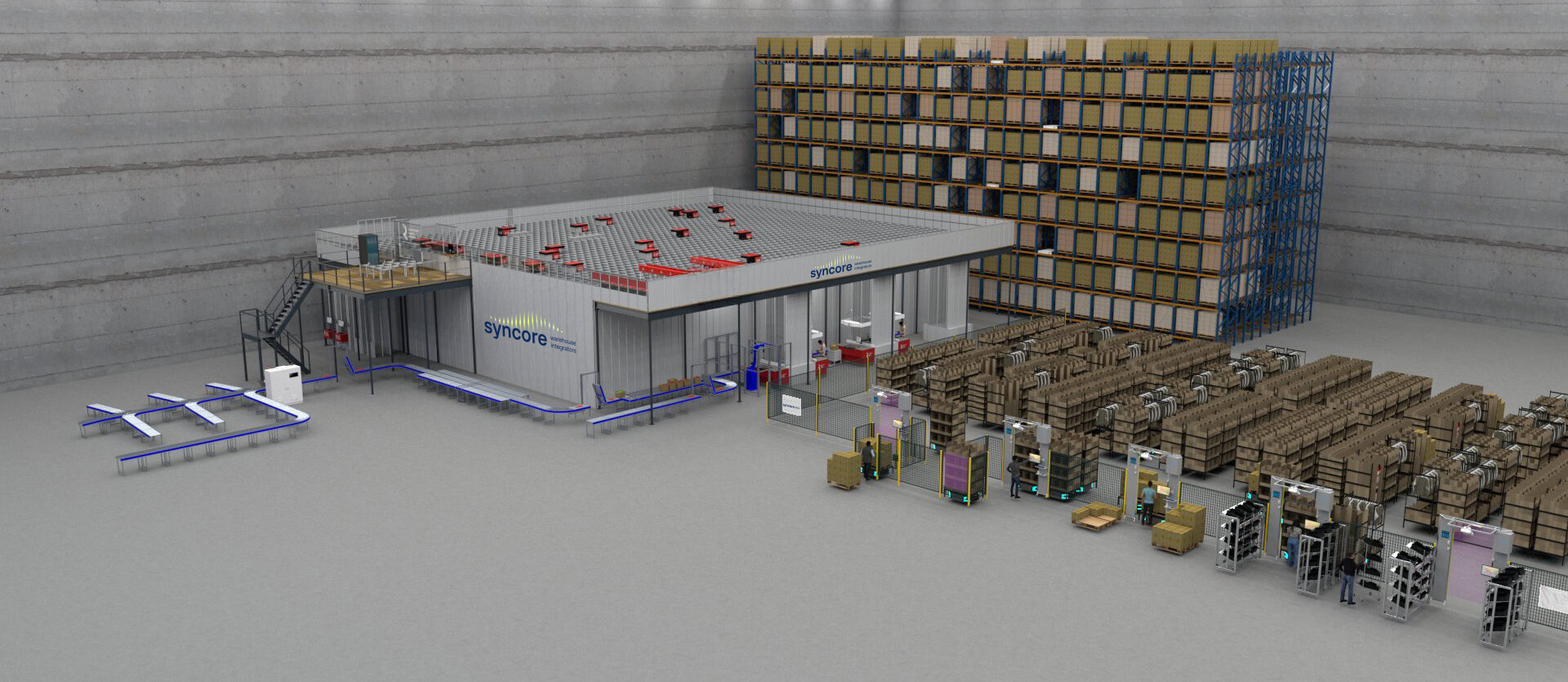
syncore’s portfolio consists of modular, best-of-breed automation solutions that allow companies to start small and scale rapidly as volumes grow.
Examples include:
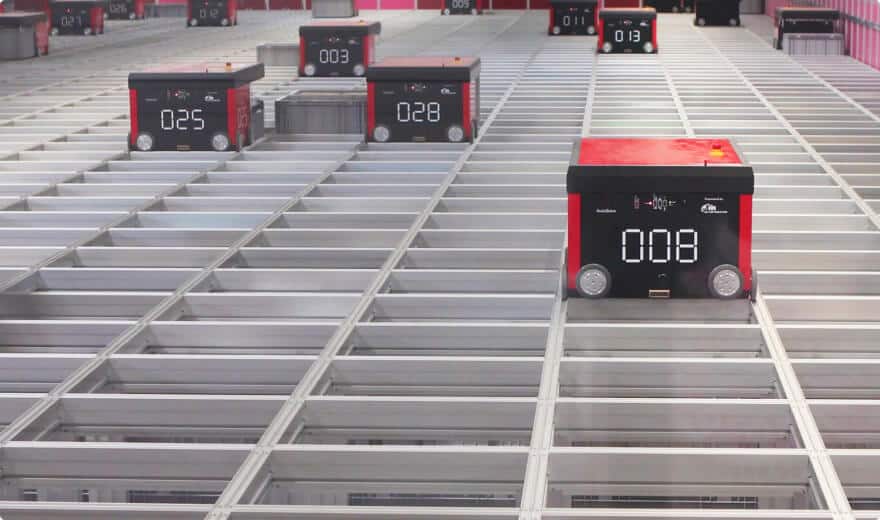
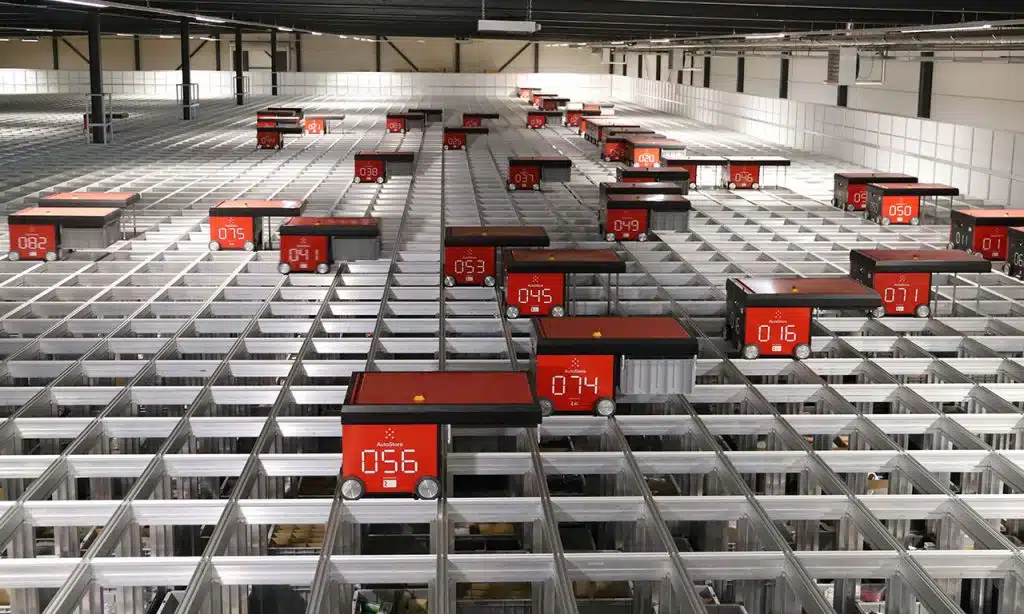
AutoStore® cubic AS/RS, with modular grids, bins, robots, and workstations that can be expanded without downtime
Geek+ goods-to-person AMR solutions, offering unmatched flexibility for tote- and shelf-based operations
Movu atlas pallet shuttle systems, enabling scalable high-density pallet storage with incremental throughput increases
All these systems are designed for phased deployment. Capacity can be added precisely when needed, without interrupting daily operations.
The benefits of modular scaling
A phased, modular approach delivers clear operational and financial advantages:
Faster ROI through small-scale pilots that validate the business case
CAPEX spread over time, aligned with cash flow and growth
Continuous operations during system expansion
Risk mitigation through iterative learning and optimisation
Long-term future-proofing using a single scalable system architecture
One portfolio, one integrated approach
Regardless of system size or complexity, all syncore solutions share the same core strengths:
Standardised, modular components that integrate seamlessly
High throughput and reliability to meet modern service levels
Flexible scalability through robots, workstations, and storage expansion
Pick accuracy above 99 percent, reducing errors and returns
Structural cost savings on labour, energy, space, and peak capacity
24/7 operational capability with proven uptime
Energy-efficient designs that support sustainability goals
This makes scalable automation accessible for warehouses of any size or layout.
syncing today’s needs with tomorrow’s growth
Scalability is where modern warehouse automation delivers its true value. By synchronising modular technologies with intelligent software and phased implementation, syncore enables warehouses to grow in step with market demand, without disruption and with a lower total cost of ownership.
Curious how scalable automation could work in your operation? Our specialists are happy to develop a tailored solution blueprint and assess how your warehouse can sync for sustainable success.