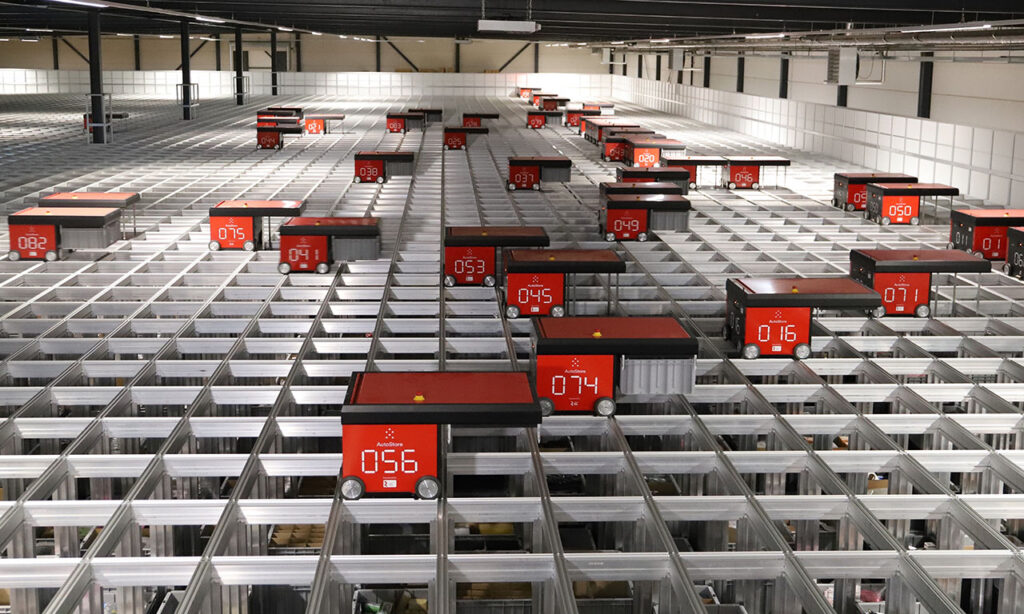
For AutoStore users, that is the moment to take a closer look. The question is not whether the system still runs today. It is where the next bottleneck is likely to appear and what you can do before peak season exposes it. The signals are often already there. You just need to know where to look.
In this article Mark van de Weijer, Head of Sales Benelux at Syncore, shares his view on how AutoStore users can prepare their systems for peak demand and future growth.
“The best time to look at an AutoStore extension is before peak season starts to hurt daily operations. In most cases, the data has been showing that pressure for months.”

Mark van de Weijer
Head of Sales Benelux at Syncore
Your data can show where the bottleneck is forming
Most warehouse teams already have the signals they need. Robot utilization, port activity, bin occupancy, and throughput patterns can help show whether the system still has enough room for the next busy period.
Extension decisions are rarely one-size-fits-all. One site may need more robots. Another may need extra port capacity. Another may have enough hardware, but need a better operating setup before adding anything new.
That is also why early review matters. AutoStore’s 2025 market research shows that 93% of respondents see higher or faster throughput as very important or extremely important in the next 12 months. If throughput is a priority, you need to know which part of the system is most likely to hold it back.
“A system can look fine on average, but peak moments tell you what is really happening. If utilization stays high during those periods, you may already be running closer to the limit than you think.”
What to check first
Not every capacity issue needs the same answer. Start by identifying where the operation slows down first.
- High robot utilization: Robots are running close to their limit for long periods.
- Port bottlenecks: Workstations cannot process demand fast enough during busy hours.
- Rising bin utilization: Storage capacity is getting tight.
- Throughput pressure: The order mix is changing and the system has less room to absorb peaks.
- Downtime risk: Maintenance or recovery becomes harder when the system is under constant load.
These signals help show whether the next step is more robots, more ports, more storage capacity, or a different way of using the system you already have.
Extend the part that is holding you back
In many cases, the smartest next step is not a larger expansion. It is improving the part of the system that is limiting performance.
That may mean adding robots to increase throughput. It may mean adding or adjusting ports to improve workstation flow. It could also mean creating more usable storage capacity. And when adding AutoStore’s new software tools can help you get more out of the system you already have before adding any hardware.
CubeVerse brings that software ecosystem together, with applications such as CubeControl and CubeAnalytics helping teams turn operational data into insights and continuous optimization.
The value is not in expanding everything. It is in knowing where the bottleneck is before you invest
“Extending AutoStore is not about buying more than you need. It is about improving the part of the system that is holding you back.”
Peak season turns into structural growth
What we see with many customers is that volumes do not fully return to the old level after a peak period. Part of the growth remains as structural growth. More orders and more throughput will slowly become the new normal.
Therefore, preparing for the peak is often not just a temporary investment for a few busy months. In many cases, it becomes a permanent part of how the operation runs and an investment for the next growth phase.
“Many companies expect it to calm down again after peak. In practice, part of that growth often just sticks.”
Why timing matters
Peak season readiness is decided before peak season begins. Lead times, planning, installation, and testing all take time.
If you wait until the problem is visible on the floor, your options are usually narrower. If you start earlier, you have time to review the data, compare scenarios, and plan the right extension around budget, peak timing, and the part of the system under strain.
“Customers often start thinking about expansion when they run out of space. But just as often, the real question is where we can improve performance inside the system they already trust.”
Ready before the rush starts
Peak season will not wait. But if you look at the data early and act on the right bottleneck, your AutoStore system can be ready before the rush begins.
At Syncore, we start with the data: so that when you’re ready to act, you already know exactly what needs to change.
Want to know whether your AutoStore system is ready for peak season?
Mark van de Weijer
Head of Sales Benelux at Syncore